 Living50+
If your joints have been hinting that it’s time to rethink your workouts, you’re in the right...
8 Strength Exercises to Do at Home with Minimal Equipment
Carrying groceries, climbing stairs, or rising from a chair can become more difficult when muscle strength begins to decline. One possible cause is sarcopenia, the gradual loss of muscle mass and physical function that commonly occurs with age.
Muscles may become less responsive to the signals that support growth and repair as we get older. Lower activity levels and other physical changes can accelerate the process. The effects may show up as reduced stamina, slower walking, difficulty with everyday tasks, and an increased risk of falls.
Strength training offers a practical way to respond. Research shows that it can help adults maintain or rebuild muscle while supporting balance, mobility, and bone health.
Getting started does not require a gym membership or specialized equipment. A sturdy chair, a wall, or a resistance band may be enough for an effective workout at home. These eight exercises can help you build the strength needed to stay active and handle daily activities with greater confidence.
 Wall Push-Ups
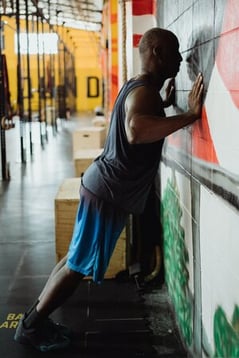
Wall push-ups are a modified version of floor push-ups and a great way to build muscle in your chest, shoulders, and arms while engaging your core.
To get started, stand about one arm's length from the wall and place your arms flat on it, about shoulder-width apart. Keep your body in a straight line from head to heels. Bend your elbows slowly and then push back to the starting position. For extra effort, hold for about five seconds before pushing away from the wall, or stand farther from the wall. Begin with 8–12 repetitions and add more over time as you feel comfortable.
Resistance-Band Rows
While wall push-ups emphasize pushing, rows involve a pulling motion that strengthens the upper back and shoulders and supports posture. This exercise can be completed sitting or standing.
Start by tying a resistance band to a solid object in your home, such as your stair banister or a door handle. Grip the other end of the band and pull it towards yourself for 8-12 reps. Keep your torso and the rest of your body still to provide a stable base, while your shoulder joint does the work. You can make this exercise harder by increasing the distance you stand from the anchor point, increasing the reps performed, or increasing the band's resistance.
Step-Ups
Step-ups are a simple way to strengthen the quadriceps and glutes, improve balance and coordination, and help with stair climbing. You can complete step-ups on any stairs within your office or home. However, avoid this exercise if it causes sharp knee pain or instability.
Starting at the bottom of the stairs, step up with your right foot. Then, bring your left foot up onto the stairs next to your right. With your right foot staying on the step, lower your left foot back onto the stair below, and repeat 8-10 times per leg. Once you've completed the exercise with your right foot stationary, swap and keep your left foot stationary while exercising your right side. Step up and down slowly, maintaining control. It’s a good idea to start with a low step, perhaps 4–6 inches high, and use a sturdy handrail for support.
Chair Squats
Chair squats strengthen your thighs, hips, and buttocks, helping you do everyday activities like standing up from a chair, getting out of a car, and climbing stairs.
Begin by standing in front of a sturdy chair with your feet approximately shoulder-width apart. Slowly bend your knees and hips as though you're about to sit down, keeping your weight balanced over your feet. Lower yourself until your buttocks lightly touch the chair, then push through your feet to return to standing. Start with 8–10 repetitions. If necessary, use the chair's armrests for assistance. As your strength improves, try completing the exercise without using your hands.
Hamstring Curls
Hamstring curls strengthen the muscles along the backs of the thighs, which help bend the knees and support walking. For this exercise, start without any additional equipment, just your legs alone. Later, as you build strength, you can add a resistance band to increase the positive effect.
To begin, stand in front of a sturdy chair or countertop for balance. Bend your right knee and bring that foot up behind you, raising your heel toward your buttocks. While performing the curl, keep your right knee pointing toward the floor and as close to your left leg as possible. Slowly return to a standing position and repeat 10-15 times. Then swap legs and exercise your left. After a few sessions, when you feel stronger, anchor a resistance band and then loop the other end around your ankle. Raise that leg as before, making sure you have a firm grip on your support.
Forearm Planks
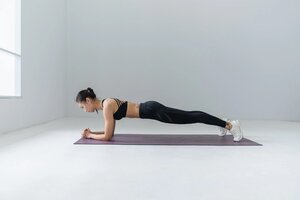 The forearm plank is an excellent way of strengthening your whole core. It's more comfortable to do the plank on a yoga or exercise mat, but a carpeted floor or rug works, too.
To begin, place your forearms flat on the mat with your elbows aligned below the shoulders. Your arms should be parallel to your body, about shoulder-width apart. Carefully raise your body onto your forearms and toes. Make sure to keep your back flat, and don't stick your buttocks high into the air. Hold this position for 10-20 seconds and then rest. Good posture and normal breathing matter more than hitting a specific time.
If this is too challenging at first, try a modified plank on your knees, or a standing plank with your forearms resting against a wall or sturdy countertop. As you do the exercise over time, you’ll get stronger and be able to add time to continue progress.
Lying Hip Bridges
The lying hip bridge helps maintain the strength of your gluteal muscles, the largest muscle group in your body. As with planks, it's most comfortable to perform lying hip bridges on your mat or other cushioned surface.
To start, lie flat on your back, bend your knees, and keep your feet flat. Tighten your abdominal and buttock muscles, press through your heels, and raise your hips until your shoulders, hips, and knees form approximately a straight line. Press your heels gently into the floor as you lift your hips, keeping your abdominal muscles engaged and avoiding excessive arching of your lower back. Do 8–12 repetitions, holding each bridge for two or three seconds, and slowly return to lying flat on the mat.
Bicep Curls
 Bicep curls help maintain upper-arm strength. While small weights at home help with bicep curls, you can use any similar-weight object if you prefer, like a filled water bottle.
When doing bicep curls, keep your back straight. Some people find it useful to stand with their backs to the wall when doing bicep curls. Hold the weight in your hand and slowly raise your arm towards your shoulder. Keep your elbows close to your sides, and move slowly and controlled, without swinging your arms. Perform 8-12 reps on each side, increasing the weight only when the current weight becomes easy to lift with good form.
Putting It All Together
Here are tips for building a solid at-home strength program.
- You don't have to perform all eight exercises perfectly from the start to benefit from strength training. If you're new to exercise, start with three or four movements and gradually add more as your strength and confidence grow.
- Aim to strength train at least twice a week, allowing at least one day of recovery between sessions that work the same muscle groups. Begin with one set of 8–12 repetitions of each exercise, or fewer if necessary. For planks, start with a 10–20-second hold.
- As the exercises become easier, gradually increase the number of repetitions, add another set, or introduce light resistance. The last few repetitions should feel challenging, but you should still be able to maintain proper form.
- Before each session, warm up for five minutes with easy walking, marching in place, or gentle arm and leg movements. Remember to breathe normally throughout each exercise, exhaling during the more demanding part of the movement.
- Consistency matters more than intensity. Two manageable strength workouts each week can help you build a foundation for better mobility, strength, and independence.
Strength supports the everyday movements that help you stay active and independent. Start with exercises that match your current ability, focus on good form, and gradually increase the challenge as you improve. A consistent routine can make daily activities easier and help you maintain mobility in the years ahead.

Related Content: