
 Living50+
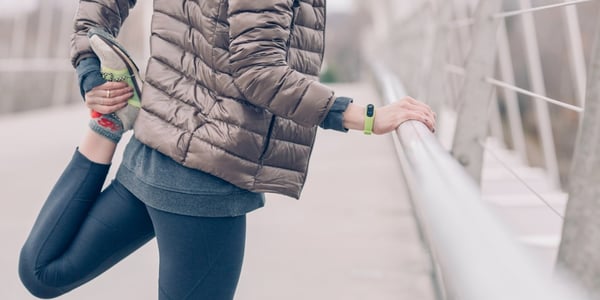
Regular stretching offers a vast number of health benefits to older adults. Tight and stiff muscles
10 Simple Exercises to Improve Balance (and Prevent Falls)
A fall can happen in a moment. A foot catches the edge of a rug, or an uneven sidewalk throws off your stride. The consequences may last for months. According to the Centers for Disease Control and Prevention, more than 1 in 4 adults ages 65 and above experience a fall each year, totaling about 37 million falls annually. Falls are also the leading cause of injury-related death within this age group.
Balance, however, can be trained. Exercises that strengthen the legs and improve weight shifting help the body stay steady and recover when a movement goes off course. The following exercises focus on abilities used throughout the day, with options to hold a sturdy support while building confidence.
Exercises to improve balance help to prevent falls in several ways:
-
Leg and hip strength help you stay upright and recover after a stumble.
-
Postural control helps keep your body's weight over your feet.
-
Weight shifting is required every time you step, turn, climb stairs, or reach.
-
Reaction and coordination help you respond when you trip or encounter an uneven surface.
-
Ankle strength and mobility help control small corrections while standing and walking.
While exercise helps, other steps to prevent falls include reviewing medications with a doctor or pharmacist, having vision and hearing checked, wearing supportive footwear, correcting hazards around the home, and staying physically active.
Here are some easy exercises you can do to help decrease your risk of falls. For safety, hold on to a sturdy counter, railing, or heavy chair that will not slide or roll. If you frequently fall, become dizzy, or have significant difficulty walking or balancing, talk with your health care provider or a physical therapist before beginning a new exercise program.
Walking Heel to Toe
Walking heel-to-toe is an excellent exercise for strengthening your legs. Start by standing beside a counter or wall for support if needed.
- Position your left foot in front of your right foot.
- Make sure your left foot's heel touches your right foot's toes.
- Move your right foot in front of the left and put your weight on the heel.
- Shift your weight to the toes and repeat the same step with your right foot.
- Continue for 10–20 steps.
Heel Lifts
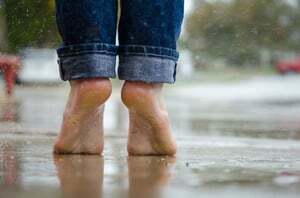 You'll need a chair or counter to do this exercise.
- Stand straight and keep your body comfortable.
- Put your arms in front of you.
- Lift yourself on your toes as high as you want.
- Now, gently lower yourself.
- Make sure you don't lean too far forward on the counter or chair.
- Begin with 8–10 controlled repetitions and gradually add repetitions or another set as the exercise becomes easier. (This applies to the rest of the exercises below unless otherwise specified.)
Single-Limb Stance
Single-Limb Stance is another excellent exercise for improving your balance. It focuses on your hips, lower back, and legs.
- Hold onto the back of your support.
- Raise your left foot and balance on your right foot.
- Hold this position for 10-20 seconds or as long as your stamina allows.
- Switch to the other side (right foot).
- When you are comfortable with this exercise, try letting go of the support briefly. Eventually, work up to the point where you seldom need support.
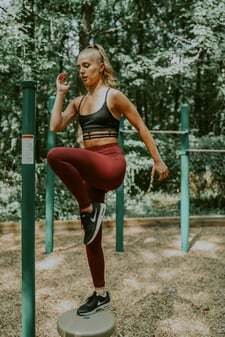 Side Leg Raise
Side Leg Raise is an excellent balance-improving exercise.
- Stand behind a solid chair.
- Keep your feet slightly apart.
- Slowly lift your left leg to the side.
- Make sure your spine is straight.
- Lower your left leg slowly.
- Repeat for the right leg.
Marching in Place
Marching in place can improve both mobility and balance. Hold onto a solid chair or counter for support if needed.
- Stand straight and comfortably.
- Elevate your left knee as high as you can.
- Lower your knee and then lift the other one.
- March for 10-20 seconds or as long as your stamina allows.
Clock Reach
For this exercise, stand beside a sturdy support, keep both feet down at first, and imagine yourself at the center of a clock: the number 6 is behind you, and the number 12 is in front of you.
- While facing forward, extend your left arm so it points toward the number 12 on the clock.
- Now, move your arm toward the number 9 on the clock.
- Then, point at number 6, which is behind you.
- Bring your arm back to number 9 and then to 12.
- You can repeat the exercise with your right hand with the number 3 instead of 9.
- Once you have mastered the exercise with both feet on the floor, try doing it when lifting one heel.
Chair Sit-to-Stands
Chair stands build the leg and hip strength needed to get out of chairs, climb stairs, recover from a stumble, and maintain independence.
- Sit tall near the front edge of a stable chair, with your feet flat on the floor.
- Rest your hands on your thighs or use the chair's armrests for support.
- Lean forward slightly from your hips, keeping your chest lifted and your back straight.
- Shift your weight forward over your toes and then press firmly through your heels and mid-foot to straighten your legs to stand.
- Then, sit down, hinging at your hips and pushing your bottom backward before bending your knees.
- Control your descent slowly until you are seated gently back on the chair
Tai Chi
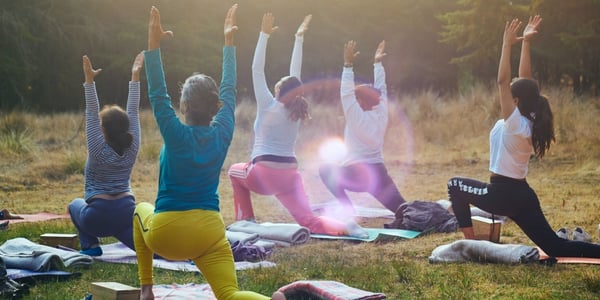
While not a single exercise, Tai Chi strengthens the legs and improves balance. Sometimes described as "meditation in motion," Tai Chi involves a series of slow, controlled movements accompanied by deliberate breathing and concentration. It combines flexibility with movement, balance, coordination, and some muscle strengthening. Many people prefer it because it’s easier than more strenuous exercise. Community education programs and other learning options, such as DVDs or streaming videos, often offer Tai Chi classes.
The value of balance practice appears outside the exercise session. It is in the confident step off a curb or the quick correction when a shoe catches the carpet. Those moments depend on strength your body can call on without much thought. Use sturdy support as long as you need it, then increase the challenge only when the movement feels controlled. Better balance gives you greater confidence in your body and more freedom to go where you want to go.


-2.jpg?width=600&name=file%20(10)-2.jpg)